Skip to content
WJ Gould Law brand banner — shield logo with the tagline “Arizona First-Party Property Insurance Claims” and practice areas Hail, Wind, Fire, Roof, Tree

William J. Gould on Insurance, Advocacy, and Standing Up for Arizona Homeowners

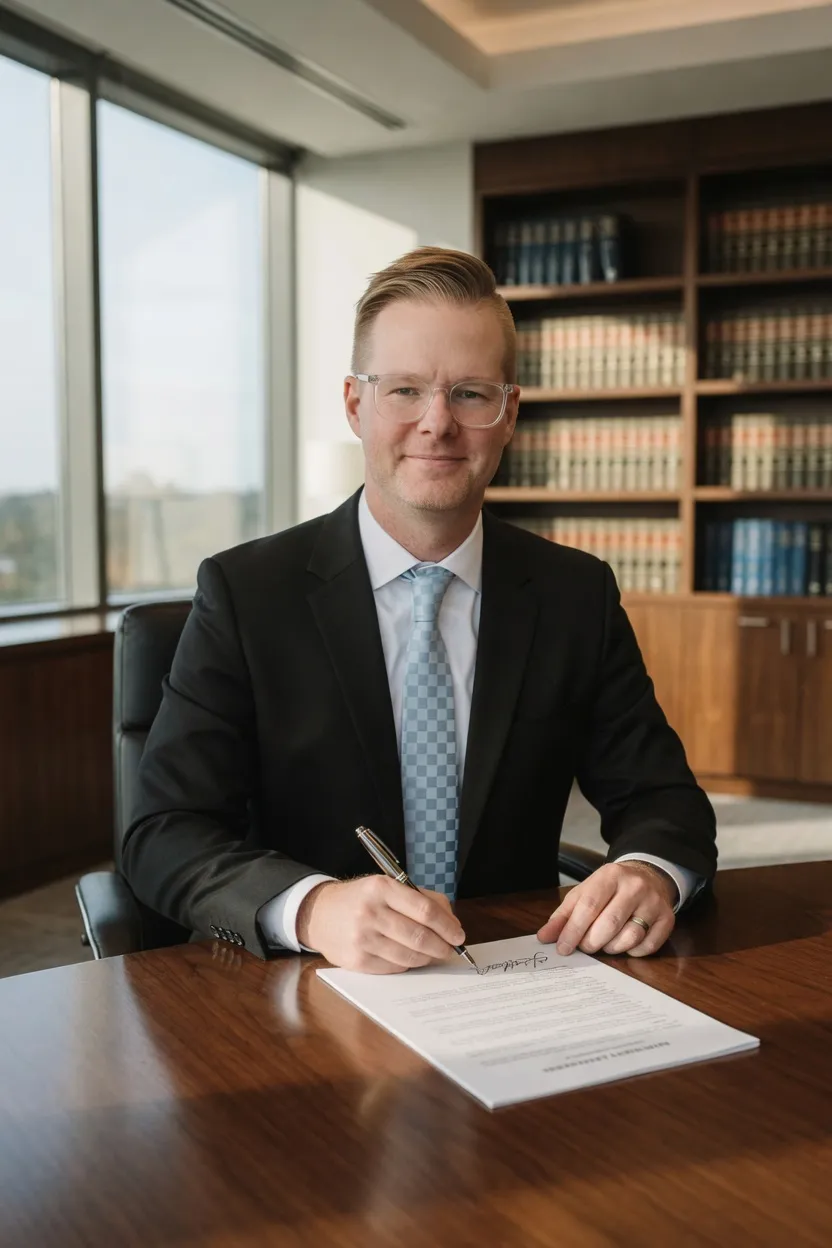
William J. Gould, Arizona first-party property insurance attorney and founder of WJ Gould Law

An Interview with William J. Gould

When a hailstorm tears across the East Valley or a kitchen fire guts a family’s home, the next phone call usually isn’t to a lawyer — it’s to an insurance company the homeowner has paid faithfully for years. William J. Gould built his Mesa practice around what happens when that call doesn’t go the way it should.

A graduate of Mitchell Hamline School of Law and a member of both the Arizona and Minnesota bars, Gould founded WJ Gould Law PLLC with a deliberately narrow mission: represent Arizona homeowners and small businesses in first-party property insurance claims, and do nothing else.

We sat down with him to talk about the path that led him to the desert, why he turned down the broader, busier kinds of practice, and what he wishes every policyholder understood before they ever file a claim.

What follows is a conversation about insurance, advocacy, and the quiet discipline of doing one thing well — lightly edited for length and clarity.

From the Upper Midwest to the Arizona Desert

Gould didn’t set out to be an insurance lawyer. He earned his J.D. at Mitchell Hamline School of Law and was first admitted to practice in Minnesota, where long winters and older housing stock make property claims a fact of life.

Arizona, he says, pulled him in a different direction. “I came out here and saw the same fundamental problem under a completely different sky,” he recalls. “Instead of ice dams and burst pipes in February, it’s hail the size of golf balls in July and roofs that get peeled back by a single monsoon cell. The weather changes. The way carriers handle claims doesn’t.”

He was admitted to the State Bar of Arizona in 2021 and set up shop in Mesa, at the center of the Maricopa–Pinal corridor where the firm does most of its work today.

Why First-Party Property Insurance — and Nothing Else

Ask most new lawyers what they practice and you’ll hear a long list. Gould gives a short one. No personal injury. No insurance defense. No family law.

“The narrow focus is the whole point,” he says. “First-party property claims are their own world — the policy language, the adjusters, the engineers carriers hire, the way depreciation and replacement cost actually work. If you dabble, you miss things. If it’s all you do, you start to see the patterns.”

In practice that means hail, wind, fire, roof, water, smoke, and tree damage — the everyday catastrophes that hit homeowners and small businesses hardest. “These are people whose home or shop is the biggest thing they own,” he says. “When a claim gets lowballed or denied, it’s not an abstraction. It’s whether they can put the roof back on before the next storm.”

Solo by Design

WJ Gould Law is a solo practice, and Gould is emphatic that it’s a choice rather than a stage on the way to something bigger. “Every case is handled by me, personally,” he says. “No junior associate you’ve never met. No call center. No handoffs where your file gets passed down the line until nobody can tell you what’s happening.”

That model shapes everything from how many cases he takes to how he answers the phone. The firm works on contingency — no fee unless there’s a recovery — offers free consultations, and keeps a 24/7 line open during storm season.

“People are surprised when the person who picks up at nine at night is the same person who’ll be arguing their case,” he says. “I think that’s how it should be. It keeps me honest about what I can actually take on.”

William J. Gould reviewing claim documents with a client at his office

What Homeowners Get Wrong About Their Own Policy

“The biggest misconception,” Gould says, “is that the number the adjuster writes down is the number. It isn’t. It’s an opening position.”

He encourages homeowners to document everything before anyone touches the damage, to read the difference between actual cash value and replacement cost on their own declarations page, and to be wary of signing away rights to contractors or public adjusters before they understand what they’re signing.

Most of all, he says, people wait too long. “There are deadlines buried in these policies, and the clock often starts at the date of loss — not the date you realize the payment was too low. The sooner someone calls, the more options I have.”

On Storms, Timing, and Showing Up

Arizona’s monsoon season — roughly mid-June through September — is the firm’s busiest stretch, and Gould plans his year around it. “A bad cell can move through in twenty minutes and generate claims for a whole neighborhood,” he says. “The carriers are ready for that. Homeowners usually aren’t.”

His advice is unglamorous: keep your policy where you can find it, photograph your roof and big-ticket property now while it’s intact, and don’t assume a denial is the end of the road. “A lot of what I do is simply showing up and refusing to take the first ‘no’ as final,” he says. “That shouldn’t be remarkable. For a lot of people, it still is.”